
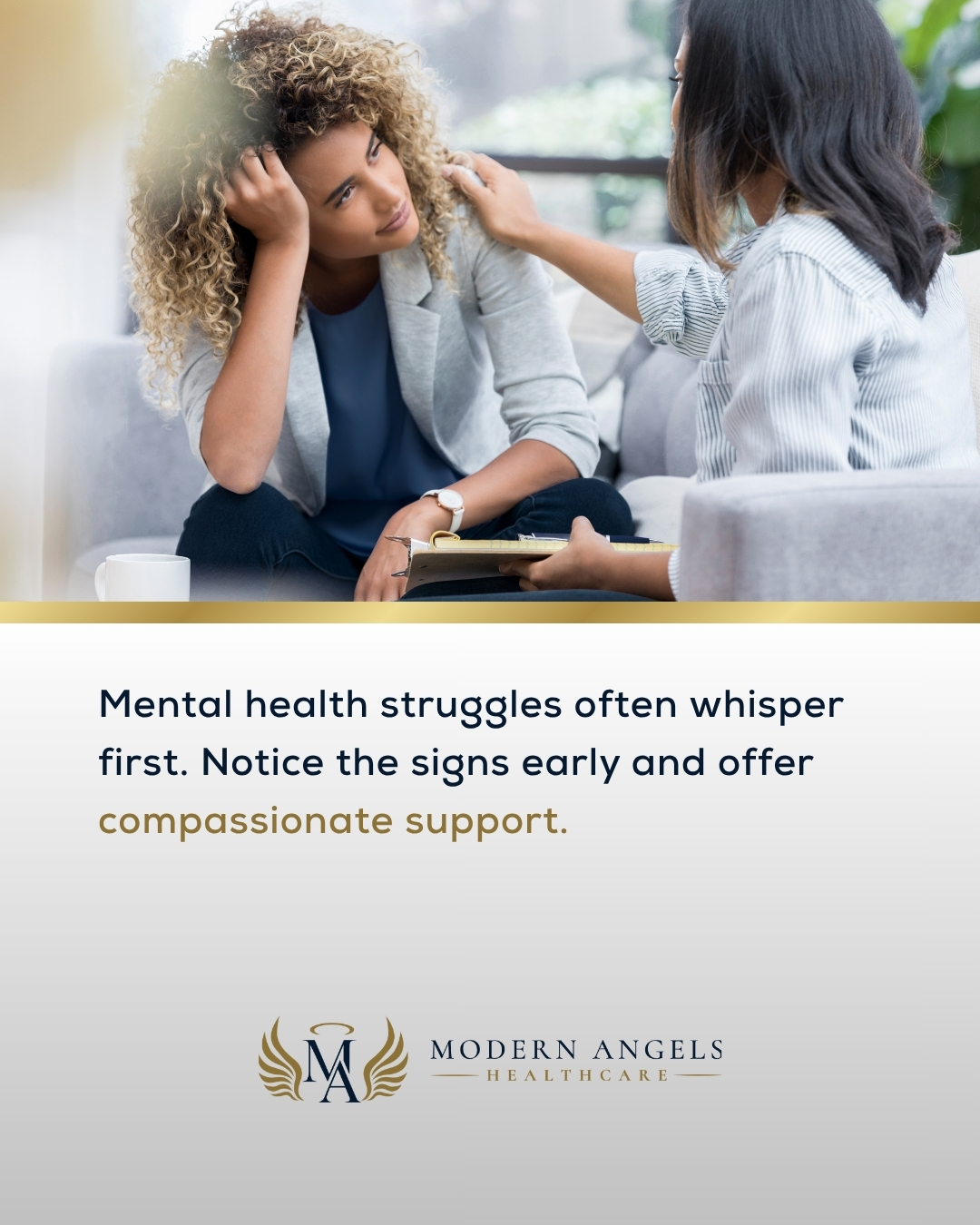


Mental health is an important part of overall wellbeing, yet many people struggle to recognize the early warning signs when emotional challenges begin to emerge. Mental health concerns often develop gradually, making it easy to dismiss symptoms as temporary stress, fatigue, or a difficult period in life.
Learning to recognize mental health red flags can help individuals, families, and caregivers offer support before challenges become more serious.
One of the most common warning signs is a noticeable change in mood. A person may seem persistently sad, irritable, anxious, or emotionally overwhelmed for an extended period. While everyone experiences difficult days, ongoing emotional distress that affects daily life should not be ignored.
Changes in social behaviour are another important indicator. Someone who previously enjoyed spending time with family and friends may begin withdrawing from social activities or avoiding meaningful interactions. Isolation can sometimes signal emotional struggles that require attention and support.
Sleep and appetite changes are also frequently associated with mental health concerns. Some individuals may experience difficulty falling asleep, staying asleep, or sleeping far more than usual. Others may lose interest in food or experience significant changes in eating habits. When these patterns continue over time, they may indicate deeper emotional challenges.
Difficulty concentrating, reduced motivation, and declining interest in hobbies or favourite activities can also be warning signs. Tasks that once felt simple may suddenly become overwhelming. This can affect relationships, work, personal responsibilities, and overall quality of life.
Another red flag involves excessive worry, fear, or stress that feels difficult to manage. Persistent anxiety can impact physical health, emotional wellbeing, and daily functioning. Individuals may feel constantly on edge or struggle to relax even in safe situations.
Recognizing these signs does not mean automatically assuming someone has a mental illness. Mental health is complex, and symptoms can have many causes. However, noticing patterns and approaching concerns with compassion can encourage meaningful conversations and appropriate support.
If a loved one appears to be struggling, begin with empathy. Listen without judgment, avoid criticism, and create a safe space for open discussion. Sometimes the simple act of checking in and asking how someone is feeling can make a significant difference.
For seniors and individuals managing health challenges, emotional wellbeing is closely connected to physical health and independence. Compassionate support, regular social interaction, and attentive caregiving can help reduce feelings of loneliness and emotional distress.
At Modern Angels Healthcare, we believe that caring for people means supporting the whole person, not just their physical needs. Our caregivers understand the importance of companionship, dignity, and meaningful human connection in promoting overall wellbeing.
Recognizing mental health red flags early allows individuals and families to take proactive steps toward support and care. Small signs should never be ignored, and seeking help is a sign of strength, not weakness.